If “food noise” feels like a constant hum in the background of your day — thinking about your next meal before you’ve finished this one, never quite landing on “satisfied” — it can feel like your body is working against you. It isn’t. Long before GLP-1 became shorthand for a weight-loss injection, it was already a hormone your gut knew how to make, every single day, in response to what you ate.
That system hasn’t gone anywhere. It’s still running. And it deserves a real seat at the table in this conversation — not as a fallback for people who can’t access medication, and not as a gentler-but-lesser alternative, but as a legitimate, whole-body path in its own right.
The System You Already Have
Specialized cells lining your intestines, called L-cells, release GLP-1 every time you eat. It slows digestion, supports steady blood sugar, and tells your brain you’ve had enough. This is your body’s built-in fullness signal — quietly running in the background of every meal, whether or not you’ve ever thought about it.
Foods That Support Your Body’s Natural GLP-1
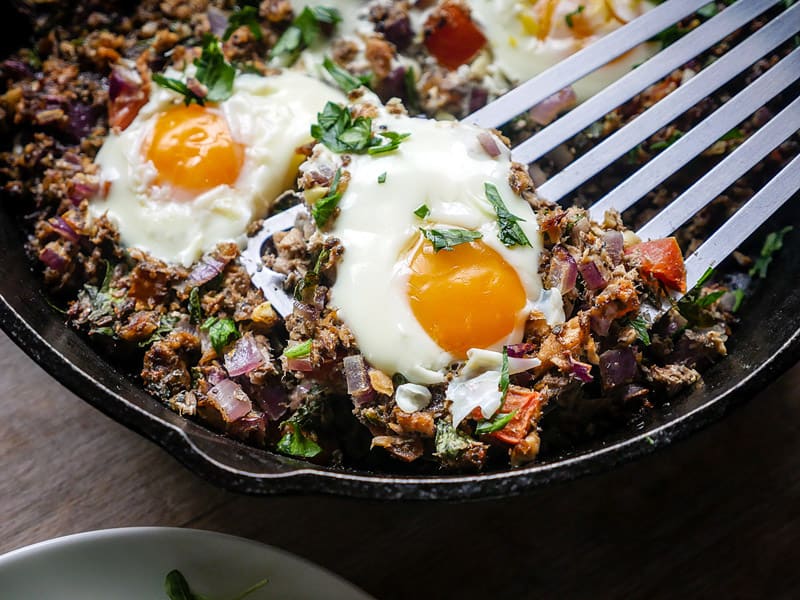
- Eggs — protein triggers L-cells directly, no digestion delay required
- Greek yogurt — protein plus fermentation, supporting both satiety and gut bacteria
- Sardines — protein and omega-3 fats, working through a complementary satiety pathway
- Oats — beta-glucan fiber with the most consistent evidence for satiety in current research
- Beans and lentils — fermentable fiber and protein together, a double mechanism
- Cooked-and-cooled potatoes — cooling transforms part of the starch into resistant starch, which behaves more like fiber
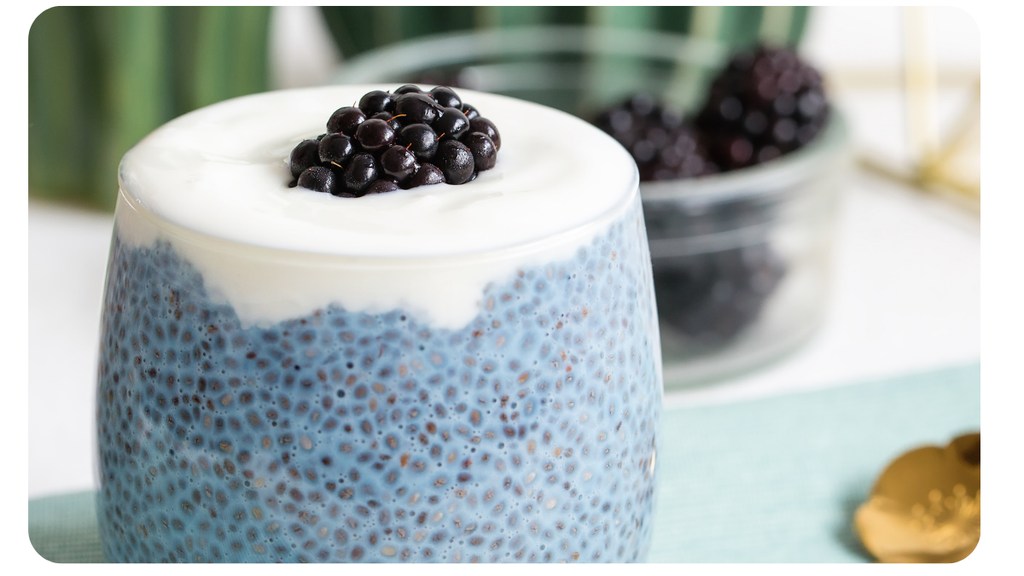
- Chia seeds — forms a gel in liquid that slows digestion and extends fullness
- Cabbage and sauerkraut — feeds the gut bacteria that produce satiety-supporting compounds
- Apples — pectin fiber that slows digestion and supports steadier fullness
Each of these works a little differently, and a few — oats, beans, and lentils especially — are backed by a 2026 scoping review in Frontiers in Endocrinology that looked specifically at which fiber types most reliably support this system across 52 human studies. Here’s a closer look at how each one fits in.
Before Reaching for Medication, It’s Worth Knowing What’s Possible with Food
We see this often: someone struggling with appetite, cravings, or stubborn weight goes straight to asking about medication, without ever being told that their own body has meaningful capability here. This isn’t about whether medication is right for you. That’s a conversation for you and your prescriber, especially alongside diabetes or significant metabolic disease. It’s about making sure “medication” isn’t the only option anyone hears about.
If You’ve Been Hesitant to Start
Maybe the side effects gave you pause. Maybe something in you resisted committing to an injection you might need indefinitely. Or maybe it just didn’t sit right. Whatever the reason, we want you to hear this clearly: that hesitation doesn’t leave you without options. There is a real, well-supported path toward better satiety, steadier blood sugar, and whole-body health that starts with how you eat and live, not with a prescription. You’re not choosing between “do something” and “do nothing.” You’re choosing which system to build first.
If You’re Already on Medication
This matters just as much, just differently. The medication is doing real work right now, but it isn’t teaching your body anything. If your appetite regulation and steady blood sugar exist only because of the drug, that’s exactly what research shows tends to fall away quickly once it stops. The habits you build while the medication is working are what you’ll have left when the prescription eventually ends: what a protein-forward breakfast feels like, which fibers your body responds to, what real fullness actually feels like versus the version the drug creates. Building that foundation now doesn’t undermine the medication or compete with it. It gives you something to stand on when that chapter of treatment is done, ideally with your prescriber guiding the transition rather than you facing it with nothing underneath you.
Food Works on Your Whole System — Medication Works on One Pathway
This is the distinction that matters more than any single study. It’s why we build from principles rather than headlines. A GLP-1 medication does one thing: it occupies a single receptor and keeps it activated. That’s a precise, powerful, narrow intervention. For the right person, in the right circumstance, that precision is exactly what’s needed.
Real food doesn’t work that way. The same bowl of lentils that triggers GLP-1 release also feeds the hundreds of species of bacteria that make up your gut microbiome. It delivers iron and folate your cells need for energy production, supports the colon lining, and moderates your blood sugar response for hours afterward. Oats don’t just support satiety. The same beta-glucan lowers LDL cholesterol and feeds a completely different set of beneficial bacteria than lentils do. Eggs don’t just trigger L-cells. They deliver choline your brain needs and complete protein your muscles use to repair themselves.
No single mechanism does all of that. That’s the case for food: not that it wins a head-to-head against any one drug’s specific outcome, but that it’s never only doing one thing. Your body wasn’t built to respond to isolated interventions. It was built to run on real, whole inputs, and it knows exactly what to do with them.
Protein First — One of the Most Direct Levers You Have
Of everything we know about triggering GLP-1, protein is one of the clearest and most direct. As it breaks down into amino acids during digestion, it activates L-cells almost immediately, with no waiting on gut bacteria and no complicated timing. That’s why what you eat first in the day carries outsized weight. A protein-forward first meal can set your fullness signal in motion early, instead of chasing it down by 10 a.m. Eggs, Greek yogurt, and sardines are the clearest examples. Sardines bring the added benefit of omega-3 fats, which work through a complementary satiety pathway.
Fiber — the Type Matters, and the Science Backs It
- Oats stood out clearly in the Frontiers review. Their beta-glucan fiber was the most consistently effective fiber type for satiety. Your gut bacteria ferment it into compounds that directly support fullness.
- Beans and lentils work through two channels at once: fermentable fiber and real protein. That combination is a big part of why they show up on nearly every credible version of this conversation.
- Cooked-and-cooled potatoes are a genuinely elegant piece of food science. Cooling a cooked starch after cooking transforms part of it into resistant starch, which behaves more like fiber in your gut. It’s a well-documented shift, and one of the easiest, cheapest changes on this entire list.
- Chia seeds form a gel in liquid that slows digestion and extends fullness. It’s an easy, inexpensive addition to almost any meal.
- Cabbage and fermented forms like sauerkraut feed the gut bacteria behind this whole process, supporting it from the microbiome side.
- Apples bring pectin, a fiber that slows digestion and supports steadier fullness. A whole apple, skin included, does more for you than apple juice ever will.
Putting It on a Plate — Simple Meal Ideas
None of this requires a meal plan or a new grocery list you’ll abandon in two weeks. A few starting points:
Breakfast: Scrambled eggs with chicken sausage, plus a small cup of Greek yogurt with berries on the side. Or overnight oats made with Greek yogurt, a scoop of whey protein, and a tablespoon of chia seeds stirred in. Or slow-cooked overnight oatmeal with diced apple and cinnamon.
Lunch: A lentil soup. Grass-fed beef sausage with a side of sauerkraut. Cooked-and-cooled potato salad tossed in an herb vinaigrette. Or a sardine, apple, and cabbage slaw with a light vinaigrette.
Dinner: A Mexican-style bowl with sardines, cabbage, and black beans. Beef and black bean chili. Sliced apple sprinkled with cinnamon for dessert.
The pattern underneath all of these: protein present at nearly every meal, a fermentable fiber source alongside it, and very little that requires special ingredients or prep.
One Reason Your Body’s Own System Deserves More Credit
The GLP-1 your gut makes on its own has a half-life of about one to two minutes. That’s not a limitation. It’s precision. Your body releases exactly the signal it needs, exactly when food arrives, and clears it the moment it finishes the job. It’s a system that responds and resets, meal after meal, for your entire life, without you ever needing to turn it off.
GLP-1 medications override that precision entirely. Scientists engineer semaglutide to resist the breakdown your body would normally apply within minutes, extending its activity to roughly a week. A single dose keeps receptors switched on continuously rather than responding meal-to-meal. That sustained override is what makes the medication effective for significant weight loss. It’s also why it comes with real tradeoffs your own system doesn’t have. GI side effects are common enough that a meaningful share of people discontinue within the first year. And because the effect comes from outside your body rather than a habit you built, research shows that stopping tends to bring a fairly fast return toward baseline rather than a gradual shift.
None of that makes medication the wrong choice for someone who needs it. It does mean your body’s own system — quiet, self-limiting, requiring no override — was never the inferior version. A conversation fixated on the version you can inject has simply overshadowed it.
If You’re Using the Medication, Protect What Actually Matters
The most useful, well-supported critique of GLP-1 medications isn’t about the drug itself. It’s about what happens around it. Rapid appetite suppression means significantly less food overall. When total intake drops, the body pulls energy from wherever it can get it, including lean muscle. Research increasingly shows this isn’t unique to GLP-1s. It’s what happens in any aggressive calorie deficit. But it’s serious either way, because muscle is where your metabolism lives.
The fix isn’t complicated, but it does need intention: adequate protein at every meal, and resistance training to give your body a reason to keep the muscle it has. The same applies to micronutrients. Eating a fraction of your usual intake carries documented risks of iron, B12, and protein deficiency, echoing what bariatric surgery patients experience. This is exactly why the food-first foundation we’ve been building throughout this piece matters even more, not less, for someone actively on medication. It’s not a competing philosophy. It’s the thing that determines what that weight loss is actually made of.
This Is Capability, Not a Diet
None of this requires perfection, restriction, or replacing anything you love. It requires building meals — starting with the first one of your day — around protein and the fiber types your body already knows what to do with.
Food isn’t the fallback option for people who can’t access medication, and it isn’t a gentler-but-lesser alternative. It’s the input your body evolved to run on in the first place. Medication does a real, specific job that food can’t replicate at that scale — and food does a whole-system job that no single medication can match. Both things are true at once, and neither one needs to shrink to make room for the other.
How Embody Approaches This
We see this as one of the clearest examples of a principle we teach constantly: your body isn’t broken, and it isn’t waiting on an external fix to start working correctly. Whether someone is building a food-first foundation from the start or actively on medication, the same work applies. Protein, movement, and real food support the whole system, not just appetite. For clients on GLP-1 medication, protecting muscle and nutrient status through that foundation often determines whether the eventual transition off the medication actually sticks.
When to Reach Out
Whether you’re building these habits from scratch, curious what’s possible before considering medication, or navigating GLP-1 medication now, this matters. If you want a sustainable foundation underneath it, this is exactly the kind of whole-picture work functional wellness coaching is built for.
Frequently Asked Questions
Whole food should always be part of the conversation — not a last resort, and not something you only hear about after medication hasn’t worked. Real food builds toward whole-body balance in ways a single medication mechanism doesn’t: it supports blood sugar, gut health, energy, and satiety all at once. That’s worth bringing up with your provider, explicitly, as something to build alongside or before medication — not instead of appropriate care for a diagnosed condition.
Native GLP-1 is active for about a minute or two per meal; GLP-1 medications stay active for roughly a week at a time. That sustained activation is what makes the medication effective, but it’s also connected to common side effects and to the rebound many people experience after stopping.
Not at all — it’s arguably the best time. The medication can handle appetite regulation while you’re on it, but that support disappears if you stop. Learning what real fullness feels like and which foods your body responds to now gives you something to stand on later, ideally with your prescriber guiding that transition.
Rapid appetite suppression means significantly less food overall, and the body will pull energy from muscle if it isn’t getting enough protein. Pairing medication with adequate protein and resistance training protects the muscle mass that keeps your metabolism working.
It’s a well-documented food-science shift, costs nothing extra, and is an easy habit to build into meals you’re already cooking.
Call to action: Your body has more built-in capability than the headlines about medication suggest — and that’s true whether you’re considering medication, avoiding it, or already on it. If you want help building a food and lifestyle foundation that actually works with your physiology, our functional wellness coaching team is here for that conversation. Call 952.935.4037 during business hours, or reach out through our Contact page to get started.


