At Embody Health and Performance, we don’t look for shortcuts — we look for leverage. Tools that support your body’s natural capacity to heal, adapt, and recover so you can move forward with confidence.
Red light therapy is one of those tools.
Used thoughtfully, it can help calm pain, support tissue healing, and improve how well your body responds to movement and rehabilitation — creating better conditions for meaningful, lasting change. Used poorly, it’s just another wellness trend. Our approach lives firmly in the first camp.
This article walks you through how we use red light therapy with our clients, why it fits our Embody approach, and what the research actually supports — without hype or miracle claims.
What Is Red Light Therapy?
Red light therapy — also known as photobiomodulation (PBM) or low‑level light therapy (LLLT) — is a non‑invasive treatment that uses specific wavelengths of light to support cellular function.
While red light therapy is often discussed alongside near‑infrared therapy, they are not the same. The greatest therapeutic benefit comes from using long wavelengths of both red light and near‑infrared light, which work together to penetrate tissue more effectively and support cellular signaling.
Unlike heat or electrical stimulation, red and near‑infrared light work at the cellular level. When delivered at the right wavelength and dose, light penetrates the skin and interacts with structures inside the cell — especially the mitochondria.
Mitochondria are often called the “power houses” of the cell. When stimulated appropriately, they can increase cellular energy production (ATP), reduce inflammatory signaling, and support the transition from irritation to repair.
That’s the why behind red light therapy’s role in rehabilitation.
How Red Light Therapy Supports Healing
From a physical therapy perspective, healing isn’t just about reducing pain — it’s about restoring capacity. Capacity to move, to tolerate load, and to adapt over time.
Research suggests red light therapy can support this process by:
- Reducing pain and inflammation so movement becomes more accessible
- Supporting tissue repair by influencing collagen synthesis and cellular signaling
- Improving muscle recovery after training or injury
- Enhancing tolerance to rehab exercise, especially in early or sensitive stages
This doesn’t mean red light therapy replaces movement, strength, or hands‑on care. It means it can make those interventions more effective.
What the Research Shows
The research on red light therapy is growing, and like most rehabilitation tools, outcomes depend heavily on how it’s applied.
Joint Pain & Arthritis
Systematic reviews and meta‑analyses suggest red light therapy can reduce pain and improve function in conditions like knee osteoarthritis when used alongside exercise and standard care. The effects are modest but meaningful — particularly for people struggling to move due to pain.
Tendon Pain (Tendinopathy)
Studies show red light therapy can help reduce pain and improve function when paired with progressive loading programs. Dose and timing matter here, which is why clinical guidance is essential.
Muscle Recovery & Soreness
Randomized trials show red light therapy applied before or after exercise can reduce delayed‑onset muscle soreness (DOMS) and speed strength recovery over the first 24–72 hours. This can be especially helpful during higher training loads or return‑to‑activity phases.
Tissue Healing
Preclinical and early clinical studies suggest red light therapy may support collagen production and cellular repair signaling. Clinically, this supports its role as an adjunct — not a stand‑alone solution — during tissue healing and recovery after injury.
How We Use Red Light Therapy at Embody
Our approach matters more than the tool — and always will.
At Embody, red light therapy is never used in isolation. We integrate it into a broader plan that respects how the body actually heals.
1. As a Support — Not a Replacement
We don’t replace exercise, movement education, or hands‑on care with red light therapy. Instead, we use it to reduce barriers — pain, sensitivity, stiffness — so you can participate more fully in the work that drives long‑term outcomes.
2. Paired With Progressive Loading
For tendon pain, joint irritation, or post‑injury recovery, red light therapy is combined with intentional loading strategies. Research consistently shows better results when PBM and movement are used together.
3. Timed Intentionally
Depending on your goals, red light therapy may be applied:
- Before movement to reduce pain or improve tolerance
- After sessions to support recovery
- During higher training phases to manage cumulative stress
There is no one‑size‑fits‑all timing — and that’s where clinical reasoning matters.
4. Adjusted Based on Your Response
We monitor how your body responds over several sessions. If it’s helping, we continue. If it’s not changing anything meaningful, we adjust or remove it. Tools should earn their place in your care.
What a Session Looks Like
Red light therapy sessions at Embody are intentionally simple, supportive, and restorative.
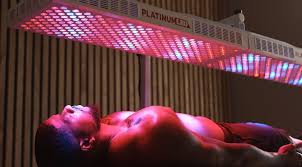
We use a medical-grade, full-body Platinum Red Light Therapy panel that delivers both red and near-infrared wavelengths. A typical session lasts 20 minutes.
We’ll set you up with the panel, walk you through what to expect, and make sure you understand how it works. From there, you’re able to experience the session privately, allowing your body to settle into deep relaxation while the light supports cellular healing and recovery.
Many clients describe these sessions as calming and grounding — a quiet pause that complements the more active work of movement, strength, and rehabilitation, and supports recovery at both the tissue and nervous system level.
Safety & Considerations
Red light therapy is generally well tolerated and non‑invasive.
It is avoided or modified in certain situations, including:
- Direct eye exposure
- Certain cancer‑related conditions
- Areas where energy delivery is contraindicated
We screen for these considerations as part of your care.
Red Light Therapy Within the Embody Approach
As neuroscientist Dr. Andrew Huberman has noted on the Huberman Lab podcast that red and near‑infrared light can influence cellular health by interacting with mitochondria and supporting energy production, recovery, and inflammation modulation — but only when the correct wavelengths and doses are used. In other words, specificity is what separates meaningful biological effects from generic light exposure.
That principle mirrors how we practice.
At Embody, we’re not interested in exposure for exposure’s sake. We prioritize intentional application — choosing the right wavelengths, timing, and context so the light actually supports the body’s capacity to heal and adapt. This is why red light therapy isn’t treated as a novelty or a stand‑alone solution here, but as a precise support layered into a broader plan of care.
Our philosophy is simple: support the body’s capacity, don’t override it.
Red light therapy fits our approach because it:
- Works with your physiology, not against it
- Enhances your ability to move, load, and adapt
- Supports better outcomes without dependency
It’s not a miracle cure — and we wouldn’t trust it if it were.
Instead, it’s a thoughtful, low‑risk way to support healing while we focus on what truly changes lives: movement, education, and long‑term resilience.
Key Takeaways
- Red light therapy can support pain reduction, muscle recovery, and tissue healing when used appropriately
- It works best as part of an integrated physical therapy plan, not as a stand‑alone treatment
- Dose, timing, and clinical reasoning matter
- Expect incremental improvements that help you move better and recover more effectively
If you’re curious whether red light therapy could support your recovery, we’re happy to talk through whether it fits your goals.
Healing isn’t about doing more things — it’s about doing the right things, at the right time, for the right reasons.


