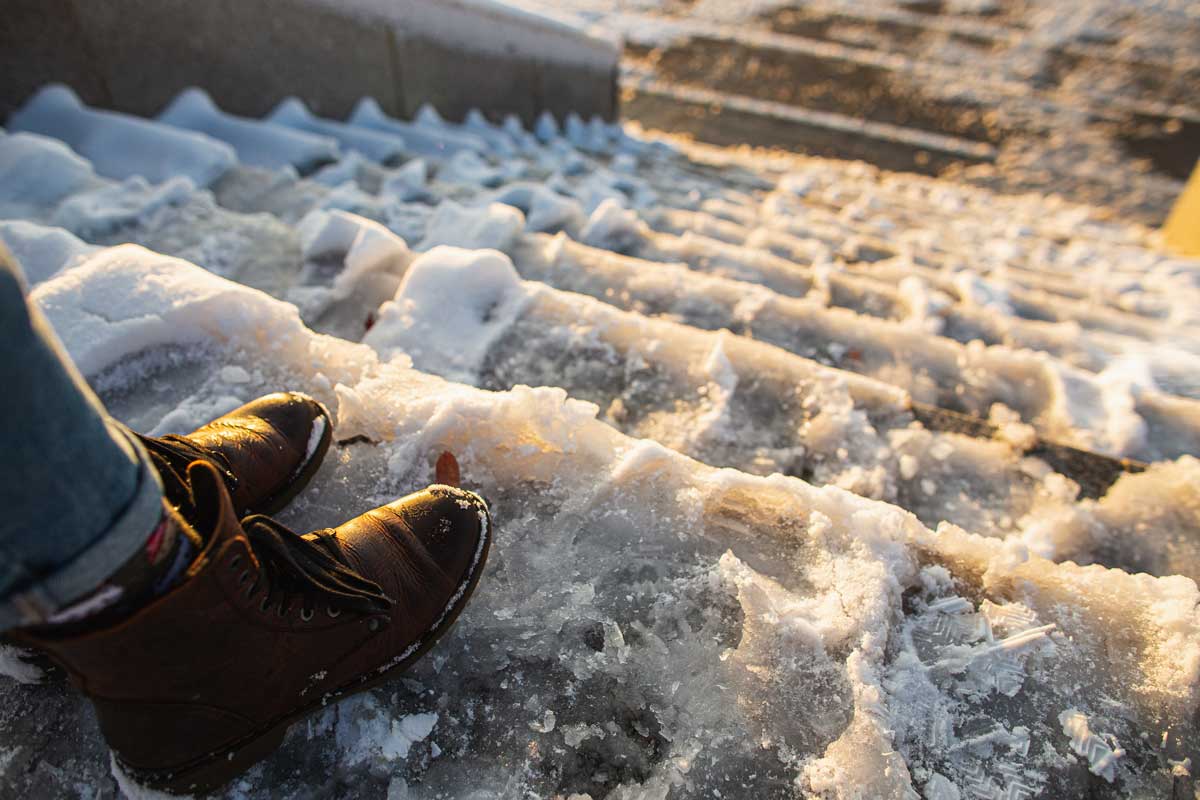
A Physical Therapist’s Guide to Walking Safely on Ice & Snow
Winter in Minnesota has a way of humbling even the most confident walkers. Ice on steps, icy walkways, slushy sidewalks, and frozen parking lots can make people tense up—or decide it’s safer not to go out at all.
As physical therapists, we see this every winter. And while staying indoors might feel safer, reduced movement over weeks or months can actually increase stiffness, weakness, balance loss, and overall fall risk.
The good news? Safe winter walking is absolutely possible—with the right mindset, movement strategy, and preparation. This guide breaks down how to walk on ice without slipping, why the famous “walk like a penguin” safety strategy works, and how to reduce your risk of falls all winter long.
Why Walking Safely in Winter Matters
Regular walking—yes, even in winter—supports:
- Balance and coordination
- Joint mobility and circulation
- Muscle strength (especially hips, ankles, and core)
- Mood, energy, and mental clarity
- Long-term fall prevention
When people avoid walking because they’re afraid of slipping on ice, we often see confidence and capacity decline together. Learning how to prevent slipping on ice keeps you moving and safe.
How Should You Walk on Icy or Other Slippery Surfaces?
Walk Like a Penguin (Yes, Really 🐧)
You’ve likely seen a “walk like a penguin” sign or heard the phrase before—and for good reason. The penguin walk is one of the most effective strategies for walking safely on ice.
Here’s why penguin safety works:
- Penguins keep their center of mass directly over their feet
- They take short, controlled steps
- They avoid sudden weight shifts or long strides
To walk like a penguin on ice:
- Take small, shuffling steps
- Keep your feet slightly wider than normal
- Bend your knees just a little
- Keep your torso upright—not leaning forward or backward
- Shift weight slowly before lifting the next foot
This reduces forward momentum and helps prevent slips on ice, especially on icy steps, icy walkways, or uneven surfaces.
If you’re wondering how not to slip on ice, this is your starting point.
How to Walk on Ice Without Slipping: A PT Perspective
Slow Down & Scan the Surface
Rushing is one of the biggest reasons people fall. When walking on slippery surfaces:
- Watch for shiny, dark patches (often black ice)
- Be cautious where snow meets bare pavement
- Test uncertain spots with a gentle foot tap
This is especially important around ice on steps or shaded areas that don’t melt during the day.
Use Your Arms for Balance
Your arms are part of your balance system.
- Keep hands out of pockets
- Let arms float slightly out to the sides if needed
- Avoid carrying heavy or uneven loads
This improves your ability to recover if you start to slip.
Wear Footwear That Actually Helps
No shoe makes you fall-proof—but the right footwear helps prevent slipping on ice:
- Non-slip rubber soles with good tread
- Boots that allow ankle movement but provide stability
- Traction devices for very icy days (remove indoors)
On your own property, using sand for driveway traction or kitty litter can dramatically improve safety on icy steps and walkways.
Strength & Balance: The Long-Term Solution to Winter Slips
One of the most overlooked safe winter walking tips is this:
Your body matters just as much as the surface.
People with strong hips, ankles, and good balance are far better equipped to:
- Recover from small slips
- Adapt quickly to uneven ground
- Stay relaxed instead of rigid
Key areas to train:
- Ankles (calf raises, ankle mobility)
- Hips (side-lying leg lifts, bridges, squats)
- Core stability
- Balance (weight shifts, tandem stance, single-leg work)
Even a few minutes a day can significantly reduce the likelihood of slipping on ice.
Extra Safety Tips for Walking on Ice
These small adjustments can make a big difference:
- Avoid over-striding—shorter steps are safer
- Keep your head up (looking down throws off balance)
- Move slowly when getting in and out of cars
- Hold stable surfaces—not car doors—when transitioning
- If you do slip, try not to stiffen aggressively; rigid muscles increase injury risk
These strategies help stop slipping on ice before it turns into a fall.
When to Get Support from a Physical Therapist
Consider professional guidance if you:
- Feel unsteady or anxious walking outdoors
- Have a history of falls
- Avoid winter walking due to fear
- Are recovering from injury or surgery
A physical therapist can assess gait, balance, and strength, and help you build a plan that supports safe winter walking—not just this season, but long-term.
Final Thoughts: Winter Doesn’t Have to Stop You
Ice and snow are part of life here—but they don’t have to sideline your movement. Learning how to avoid slipping on ice, practicing the penguin walk, and building a resilient body can help you walk confidently all winter long.
Movement is one of the most powerful tools we have for health. With the right strategies, winter can still be a season of strength—not fear.
If you’d like help building confidence, balance, or a winter-ready walking plan, our team is here to help.


