Winter often makes movement feel harder—shorter days, colder temperatures, icy sidewalks, and the temptation to stay indoors. But from a medical and physiological standpoint, walking in the cold offers benefits you simply don’t get in warmer seasons.
As a physical therapist, I encourage winter walking not just as “better than nothing,” but as a powerful way to support circadian rhythm, mood, circulation, metabolic health, immune resilience, and balance—especially when you use the timing of outdoor light (sunrise, solar noon, sunset) intentionally.
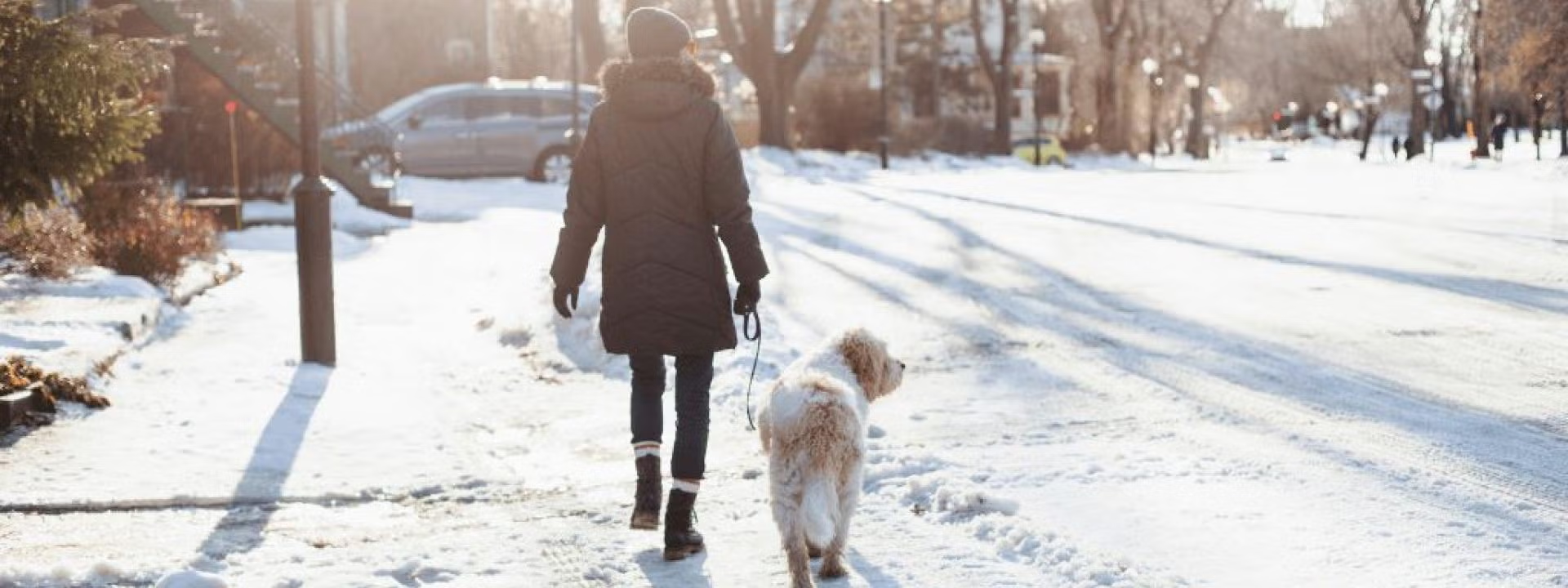
If you’ve ever owned a dog, you already know the punchline: winter doesn’t stop life from happening. It just asks you to layer up and go anyway.
Let’s break down the most meaningful walking in cold weather benefits, backed by physiology and research.
Sunrise Walks: Morning Light, Melatonin “Off,” and Your Circadian Rhythm
Winter sunrise light tends to be low-angle and rich in longer wavelengths (including more red/infrared light). But the most important clinical feature is timing: morning outdoor light is one of the strongest cues for your circadian rhythm—your internal 24-hour clock.
When you get outside early (even for 10–20 minutes), you’re giving your brain a “daytime signal” that helps:
- Suppress melatonin from the night before (the body’s sleep hormone)
- Reinforce wakefulness and daytime alertness
- Set the clock for when your body will feel sleepy again ~14–16 hours later
- Improve consistency of sleep onset and sleep quality over time
PT perspective: In cold temperatures, connective tissue can feel stiffer at first. Start with a gentle pace for the first few minutes and gradually build speed as your ankles, knees, hips, and spine warm up—especially if you’re walking in 20 degree weather or walking in 30 degree weather.
Cold Walking, Brown Fat, and Why Winter Walking Burns More Calories
One of the most unique and often overlooked benefits of walking in cold weather is how it influences your metabolic system—specifically through the activation of brown adipose tissue, commonly known as brown fat.
What is brown fat?
Unlike white fat, which primarily stores energy, brown fat is metabolically active tissue designed to generate heat. Its role is thermoregulation—helping your body maintain a stable core temperature when exposed to cold.
Brown fat does this by burning fuel (glucose and fatty acids) to produce heat, a process known as non-shivering thermogenesis.
Importantly, research has confirmed that adults do retain functional brown fat, and that cold exposure is one of the strongest activators of it in humans.
How Walking in the Cold Activates Brown Fat
When you walk in cold weather, two metabolic demands occur simultaneously:
- Movement-related energy use (the cost of walking itself)
- Thermoregulatory energy use (the cost of staying warm)
Cold exposure signals brown fat to activate, while walking prevents excessive heat loss and allows this process to occur without shivering.
This is the physiological reason behind a common question:
Does Walking in the Cold Burn More Calories?
In many cases, yes.
Walking in cold temperatures increases overall caloric expenditure because your body is spending energy not only on locomotion, but also on maintaining thermal balance.
This effect is more pronounced when:
- Exposure is consistent over time
- Temperatures are cold but tolerable
- Walking intensity is steady rather than maximal
Metabolic and Cardiovascular Implications
From a clinical perspective, this combination of cold exposure and movement creates a metabolic advantage:
- Higher energy expenditure at moderate walking speeds
- Improved metabolic flexibility
- Cardiovascular stimulation without excessive heart rate elevation
- A sustainable option for people who don’t tolerate high-intensity exercise
In other words, walking in the cold allows the body to work harder metabolically without requiring you to work harder mechanically.
This is particularly valuable for individuals managing:
- Joint pain or arthritis
- Chronic fatigue
- Deconditioning
- Weight or metabolic health concerns
A Physical Therapy Perspective on Cold Walking and Metabolism
Cold weather walking offers a rare overlap between accessibility and physiological impact. It supports metabolic health without requiring specialized equipment, gym access, or high-impact training.
PT Tip:
The goal isn’t to be uncomfortable—it’s to be slightly challenged. Dress in layers, protect extremities, and allow your body to adapt gradually. With consistency, cold tolerance and metabolic efficiency both improve.
Walking in the Cold: Benefits for Your Peripheral Vascular System
Cold exposure changes how blood circulates through the body—and walking amplifies these effects in a clinically meaningful way.
Improved vascular responsiveness
Cold triggers vasoconstriction (narrowing of blood vessels near the skin) to preserve core temperature. As you walk and generate heat, those vessels gradually reopen via vasodilation.
This alternating pattern acts like vascular training, improving how adaptable your circulatory system is to both temperature and movement demands. Reviews of human cold exposure physiology describe these core responses (vasoconstriction + thermogenesis) as central to cold adaptation.
Enhanced peripheral blood flow
Walking activates the calf and foot “muscle pump,” improving venous return from the lower body. Combined with temperature-driven vessel responsiveness, consistent cold walking may support:
- Better circulation efficiency
- Improved tolerance to cold exposure over time
- Healthier regulation of peripheral blood flow
PT tip: Start gradually and keep extremities warm—cold, numb hands/feet reduce proprioception, which can affect balance and gait quality.
Noon Walks: Solar Noon, Vitamin D Reality in Winter, and Midday Movement
Noon is typically the brightest and warmest part of winter days. But it’s important to be honest about vitamin D:
Vitamin D in winter at high latitudes
At higher latitudes, winter sunlight often provides little-to-no meaningful UVB for vitamin D production. A classic study showed that winter sunlight exposure in places like Boston and Edmonton would not promote meaningful cutaneous vitamin D synthesis.
That said, solar noon still offers benefits:
- Strongest outdoor light signal of the day (circadian reinforcement)
- Best chance for any available UV exposure
- Warmer temps for longer walking sessions
- A reliable “movement break” that offsets sitting-related stiffness
PT perspective: Noon walks are great for gait variety—slight hills, longer strides, or different surfaces (carefully) to train adaptability.
Sunset Walks: Nervous System Downshift + Balance Training in Real Life
Sunset walks are ideal for stress reduction, but they also carry a powerful clinical advantage that many people miss.
Visual and vestibular stimulation in low light
As light fades, the visual system has less information to work with. That means your brain relies more heavily on:
- The vestibular system (inner ear)
- Proprioception from ankles/feet/hips
- Subtle postural reflexes
In practice, low-light walking gently challenges depth perception and balance, creating functional “balance training” without formal balance drills—especially relevant in winter when surfaces and visibility are less predictable.
This is particularly useful for people with:
- Prior ankle sprains or knee instability
- Balance confidence concerns
- Vestibular sensitivity or post-concussion history
- Fear of slipping on ice
PT Perspective – Mindful gait at sunset:
Slow down and focus on:
- Controlled heel strike and weight acceptance
- Smooth toe-off
- Natural arm swing
- Relaxed breathing
This supports downregulation, reduces unnecessary muscle tension, and reinforces efficient gait sequencing.
Mood Benefits: Why Outdoor Walking Can Work Better Than Indoor Walking
Walking is good. Walking outdoors can be even better for mood and mental clarity.
A well-known study found that frequency of nature contact was significantly associated with greater emotional well-being and emotional regulation.
So yes—walking in cold benefits your mood, not just your muscles.
Immune Resilience: Cold Exposure + Walking
It’s common to hear that cold exposure “boosts immunity.” The truth is more nuanced: cold triggers physiological stress responses, and moderate exercise supports immune surveillance and regulation.
Exercise immunology research shows that moderate activity enhances immune cell circulation and “immunosurveillance,” especially when repeated consistently over time.
Cold exposure literature also emphasizes that changes in immune markers don’t always translate directly to infection resistance—but the overall pattern supports the idea that regular moderate movement is immune-supportive, especially compared to being sedentary.
Practical takeaway: If winter is when you usually stop moving, winter walking may be one of the most protective habits you can keep.
Walking in Cold vs Heat: Why Cold Often Wins for Sustainability
People also ask (and it’s fair): is walking in the heat good for you?
It can be—but extreme heat (like walking in 100 degree weather) increases dehydration risk and cardiovascular strain.
Winter walking tends to be more manageable for many people because:
- Overheating is less likely (if dressed appropriately)
- Pace can remain steady without as much thermal stress
- Recovery can feel easier at moderate intensity
How to Dress for Walking in Cold Weather (PT Safety Guidance)
If you’re asking is it ok to walk in cold weather, the main determining factor is preparation.
Layering basics
- Base layer: moisture-wicking (avoid cotton)
- Mid-layer: insulation (fleece/wool)
- Outer layer: wind-resistant shell
Protect extremities (this matters medically)
Hands, feet, and ears lose heat quickly. Cold extremities reduce sensation and proprioception, which can increase slip risk.
- Warm socks + appropriate footwear
- Gloves/mittens
- Hat/headband
- Neck gaiter for very cold air
Route and visibility
- Choose well-lit routes
- Wear reflective gear at sunrise/sunset
- Consider traction devices when icy
Clinician Takeaway: Why Winter Walking Matters Medically
From a physical therapy perspective, walking in the cold isn’t just exercise—it’s a systems-level intervention.
When done consistently and safely, cold weather walking supports:
- Circadian rhythm timing through morning light
- Metabolic activation via brown fat and thermogenesis
- Vascular responsiveness through temperature-driven blood flow changes
- Mood benefits through outdoor/nature-based walking
- Immune regulation through consistent moderate movement
Final Thoughts (and Yes… the Dog Argument)
Anyone with a dog knows the truth: they don’t care what the weather is doing.
Cold, snow, wind—doesn’t matter. They still need to get outside. And on the days you least want to go, those walks often end up being the ones that clear your head, steady your mood, and remind you your body was built to adapt.
So yes—the moral of the story might be: get a dog.
Or at least borrow one and commit to the walk.
If you want help building a winter walking routine that supports your sleep, mobility, balance, and resilience—our team at Embody Health and Performance can help you personalize the plan.


