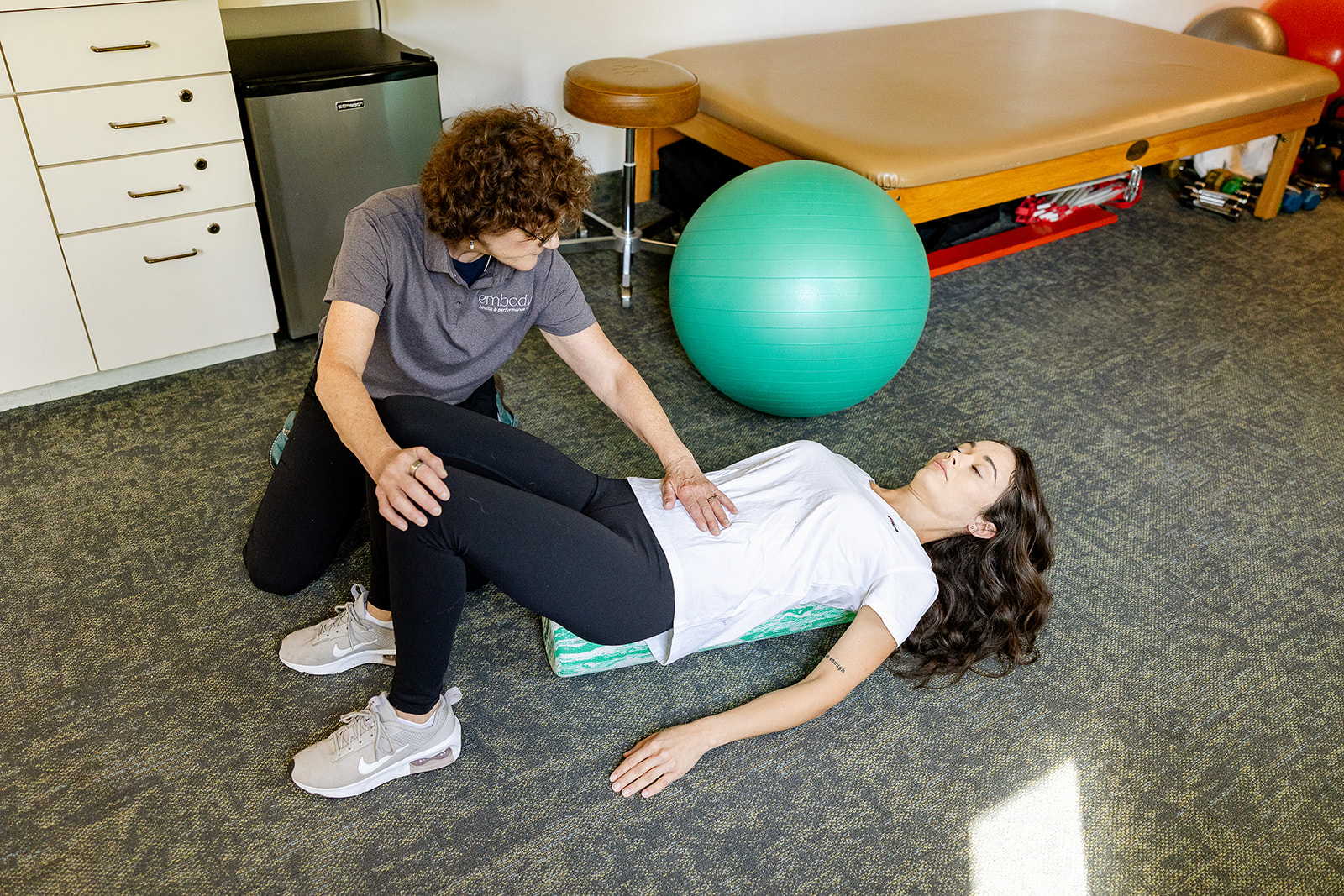
When you’re recovering from an injury, most people focus on the physical side:
strengthening, mobility work, stretching, or pain-relief modalities.
But in the clinic, we often see something even more influential than exercise alone:
Your stress levels can make or break your recovery.
You can have a well-designed rehab program, but if your nervous system is overwhelmed, healing slows down, pain becomes more persistent, and your body doesn’t adapt the way it’s capable of.
Here’s why stress plays such a powerful role in recovery — and what you can do to shift your body into a state where it can truly heal.
Stress Changes Your Physiology — and Not in a Healing Direction
When you’re under stress, your body shifts into fight-or-flight mode, also known as sympathetic nervous system activation. This response is essential for survival, but it works directly against recovery.
In a stressed state, the body prioritizes protection over repair. Physiologically, that means:
- Blood flow is redirected away from muscles and healing tissues
- Muscle tension and guarding increase
- Pain sensitivity rises
- Inflammation stays elevated
- Sleep quality declines
- Digestion and nutrient absorption decrease
- Hormones that support tissue repair and adaptation drop
In physical therapy, we often see people doing “everything right” — consistent exercises, appropriate loading, good effort — yet progress stalls. The missing piece is often nervous system overload, not weakness or lack of discipline.
Your body doesn’t prioritize healing when it perceives threat, whether that threat is pain, poor sleep, work stress, or life demands.
Stress Amplifies Pain — Even Without New Injury
Not all pain reflects tissue damage.
A significant portion of pain is driven by nervous system sensitivity.
When stress is high:
- The brain becomes hyper-vigilant
- Pain thresholds lower
- Muscles guard reflexively
- Breathing becomes shallow and rapid
- Normal movements can feel threatening
This often creates a frustrating loop:
Stress → increased pain → more stress → more pain
Breaking this cycle is a core component of integrative physical therapy. If we only chase symptoms without addressing nervous system input, pain often persists long after tissues are structurally capable of healing.
How Stress Slows Tissue Healing and Adaptation
For tissues to heal — muscle, tendon, ligament, or fascia — the body needs:
- Adequate circulation
- Oxygen delivery
- Nutrient availability
- High-quality rest
- Parasympathetic (“rest and repair”) activation
Chronic stress interferes with all of these.
When the body remains in fight-or-flight mode, tissue remodeling and adaptation are delayed. This is why people under high stress often experience:
- Slower progress despite consistent rehab
- Recurrent flare-ups
- Persistent tightness that stretching doesn’t resolve
- Difficulty building or maintaining strength
- Poor sleep, which further slows healing
Healing happens most efficiently in a system that feels safe, not constantly on alert.
The Nervous System’s Role in Recovery
Recovery isn’t just about tissues healing on a timeline — it’s about the nervous system allowing movement to feel safe again.
Many people continue to experience pain or stiffness even after tissues are capable of handling load. From a physical therapy perspective, this isn’t weakness or lack of effort. It’s often a nervous system that hasn’t fully shifted out of protection mode.
Common signs include:
- Pain that feels out of proportion to activity
- Stiffness that doesn’t respond to mobility work
- Flare-ups despite appropriate loading
- Hesitation or fear around certain movements
- Lingering fatigue
Addressing strength and mobility without addressing regulation often leads to plateaus.
What You Can Do: Shift Into “Rest and Repair” Mode
The encouraging news is that your nervous system is adaptable. With the right inputs, you can actively shift your body toward a state that supports healing.
One of the simplest, most effective tools we use in physical therapy is box breathing — done through the nose, with diaphragmatic control.
Nasal Box Breathing & Diaphragmatic Breathing for Recovery
Box breathing is most effective when performed through the nose, not the mouth.
Nasal breathing naturally down-regulates the sympathetic nervous system. Even before changing the rhythm of your breath, breathing through your nose begins to slow the stress response and reduce unnecessary tension.
When paired with diaphragmatic breathing, box breathing becomes a powerful recovery tool.
How to Practice Nasal Box Breathing
- Inhale through your nose for 4 seconds, allowing the lower ribs to expand
- Hold the breath for 4 seconds
- Exhale slowly through your nose for 4 seconds
- Hold empty for 4 seconds
Repeat for 1–3 minutes.
Why Nasal Breathing Supports Nervous System Regulation
Breathing through the nose changes how your nervous system behaves.
Nasal breathing:
- Slows breathing rate
- Reduces fight-or-flight activation
- Increases nitric oxide production, improving circulation and oxygen delivery
- Reduces stress-related over-breathing
- Encourages calmer, more efficient breathing patterns
In contrast, mouth breathing is often faster, shallower, and more closely associated with stress, anxiety, and pain sensitivity.
For injury recovery, nasal breathing helps signal safety to the brain — a necessary condition for healing.
Diaphragmatic Breathing in Physical Therapy Recovery
Diaphragmatic breathing — sometimes called “belly breathing” — allows the breath to expand the lower ribs and abdomen rather than lifting the chest and shoulders.
This distinction matters.
Shallow chest breathing:
- Reinforces a stress response
- Keeps neck and shoulder muscles overactive
- Increases muscle guarding
- Reduces oxygen efficiency
Diaphragmatic breathing:
- Activates the parasympathetic nervous system
- Reduces unnecessary muscle tone
- Improves spinal and rib cage mobility
- Enhances oxygen exchange
- Lowers pain sensitivity
- Improves movement quality during rehab
In physical therapy, diaphragmatic breathing is not a relaxation add-on — it’s a foundational movement skill. When breathing improves, the nervous system becomes more receptive to strength, mobility, and load.
Why Physical Therapists Use Breathing to Improve Recovery
When nasal, diaphragmatic breathing is paired with the structured rhythm of box breathing, the nervous system receives clear signals to slow down.
The result:
- Lower heart rate
- Reduced muscle guarding
- Improved circulation to healing tissues
- Better tolerance to movement and loading
- Improved ability to “absorb” rehab and training
This is why we often use breathing before exercises to improve movement quality and after sessions to support recovery.
Breathing isn’t something that happens alongside rehab — it’s one of the tools that makes rehab work better.
Additional Ways to Reduce Stress and Support Healing
- Gentle, slow mobility to signal safety to the nervous system
- Red light therapy to support circulation, inflammation control, and cellular repair
- Acupuncture for parasympathetic activation and pain modulation
- Sleep hygiene to improve hormonal and tissue recovery
- Smarter loading, not more loading — recovery suffers when stress is already high
- Slow nasal breathing throughout the day to reduce baseline tension
These strategies don’t replace rehab — they enhance its effectiveness.
A Calm Nervous System Heals Faster
If you’re feeling stuck in your recovery, it may not be because your body can’t heal — it may be because your nervous system hasn’t been given the support it needs yet.
When stress is regulated and the nervous system feels safe, the body is better able to:
- Reduce pain
- Restore mobility
- Build strength
- Adapt to training
- Recover efficiently
- Prevent future injury
As physical therapists, we don’t just treat tissues.
We treat the system that controls the tissues.
Your recovery begins when your nervous system feels safe.


