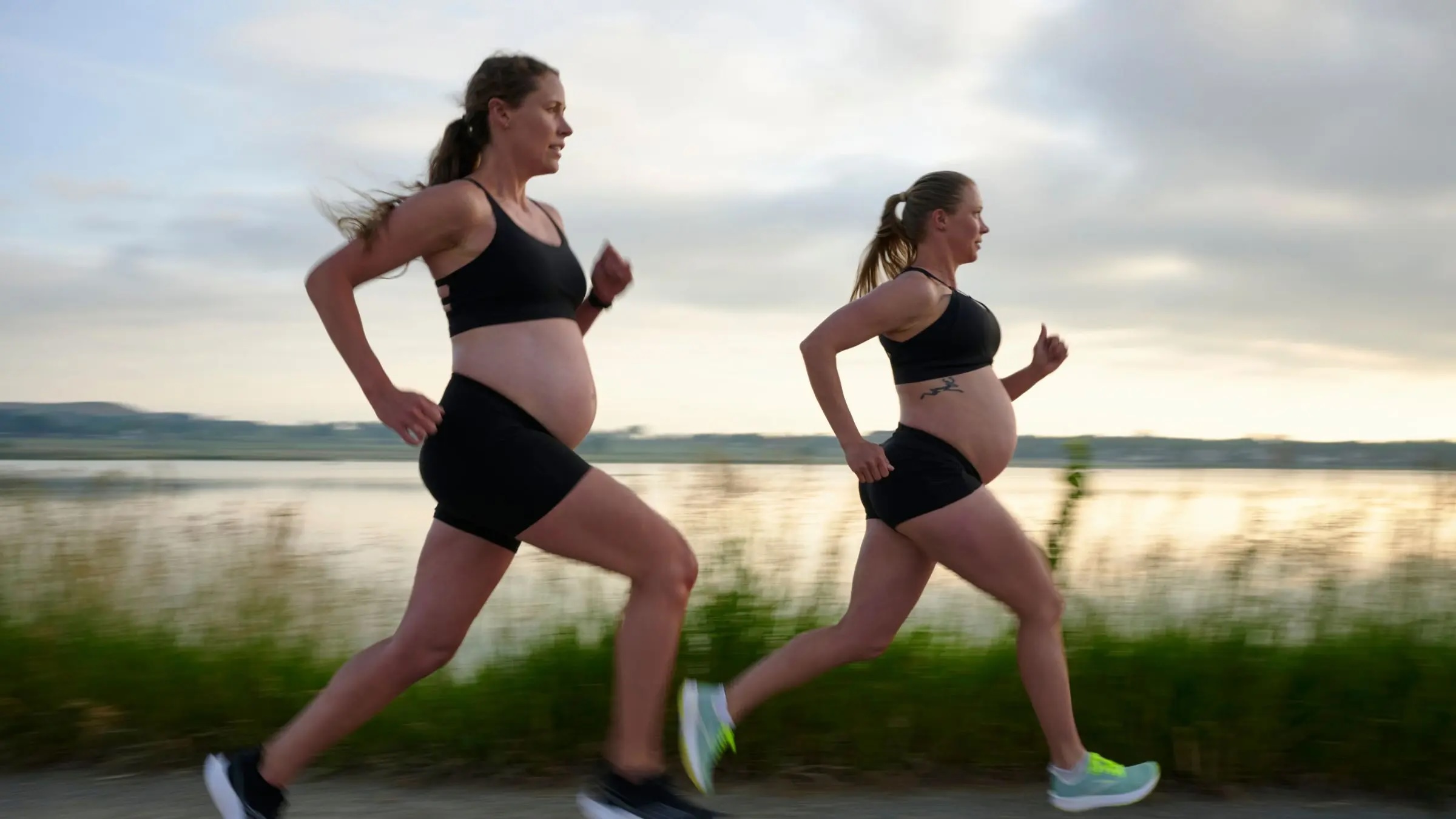
For many women, running is more than exercise—it’s stress relief, identity, and routine.
So when pregnancy begins, one of the most common questions is:
Is it safe to run while pregnant?
If you’ve searched online, you’ve likely seen completely opposite answers:
- Running during pregnancy is completely safe
- You should stop running immediately
That kind of conflicting advice leaves many women unsure what to do.
From a physical therapy perspective, the answer is more useful than either extreme:
Running while pregnant can be safe, but only if your body is adapting well to it.
Can You Run While Pregnant?
Yes—running while pregnant is safe for many women, especially if you were running before pregnancy and are not experiencing symptoms like pain, pressure, or instability.
The key is not just whether you can run, but whether your body is:
- Tolerating the impact
- Recovering well
- Coordinating movement effectively
As physical therapists, we look at how your body is adapting in real time, not just what general guidelines say.
Is Running Safe During Pregnancy?
In a healthy, uncomplicated pregnancy, running while pregnant is generally safe—especially if you were already running before becoming pregnant.
But safety isn’t just about permission. It’s about capacity.
Instead of asking:
- Is it safe to run while pregnant?
A better question is:
- Is running during pregnancy working well for my body right now?
Because pregnancy changes how your body:
- Produces and absorbs force
- Stabilizes joints
- Coordinates breath and core
- Recovers from impact
And those changes matter more than any blanket rule.
Who Should Not Run During Pregnancy?
While running during pregnancy is safe for many, there are situations where it may not be appropriate.
You should pause or avoid running if you have:
- Persistent pelvic pain or pressure
- Vaginal bleeding or concerning symptoms
- Significant instability or balance issues
- Pain that worsens during or after running
- Medical guidance advising activity modification
This isn’t about restriction—it’s about choosing the right type of movement for your body at the right time.
How Running During Pregnancy Changes Your Mechanics
As your body adapts, running while pregnant will naturally feel different.
Common changes include:
- A shifting center of gravity as your abdomen grows
- Hormonal changes (like relaxin) affecting joint stability
- Increased demand on the pelvic floor
- Changes in breathing mechanics and endurance
- Alterations in stride and coordination
These changes don’t automatically mean you need to stop running.
But they do mean your body may need a different strategy to support it.
Pelvic Floor & Running While Pregnant
One of the most overlooked aspects of running while pregnant is the pelvic floor.
This system isn’t just something to strengthen—it needs to coordinate with your breath, core, and movement.
Running places repetitive load through the body. That load has to be managed somewhere.
Signs your body may need more support:
- Heaviness or pressure
- Leaking during or after running
- Hip or low back discomfort
- A feeling of instability
These are not things to push through.
They are signals your body is asking for a different approach.
If you’re noticing symptoms, working with a provider trained in pelvic floor physical therapy can help you understand what your body needs.
Is Running While Pregnant Safe in the First Trimester?
A common question is:
Is running while pregnant in the first trimester safe?
For many women, yes—but early pregnancy often brings:
- Fatigue
- Nausea
- Changes in recovery
- Early hormonal shifts
This is often when running starts to feel “off,” even before visible changes occur.
Adjustments may include:
- Shorter runs
- Lower intensity
- More recovery days
Listening early tends to make the rest of pregnancy more sustainable.
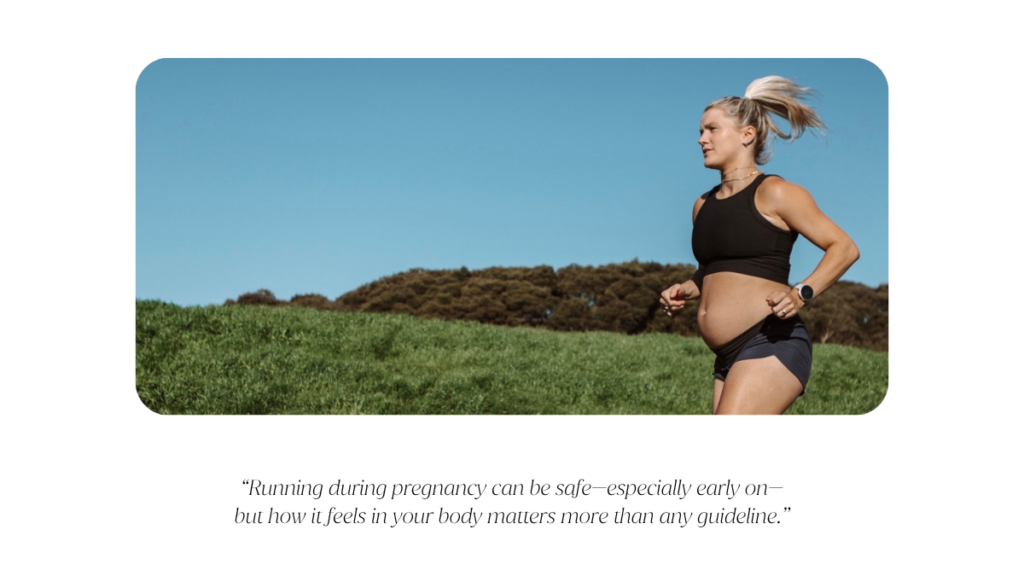
Signs You Should Modify Running While Pregnant
Continuing to run isn’t the goal—running well is.
Consider modifying running during pregnancy if you notice:
- Persistent pelvic pressure or pain
- Urinary leakage
- Abdominal coning or doming
- Lingering soreness
- A sense of instability
Smart ways to modify running:
- Run-walk intervals
- Shorter distances
- Softer surfaces
- Cross-training (cycling, incline walking)
- Integrating strength work
This isn’t a step backward. It’s how you stay consistent.
Strength Training Supports Running During Pregnancy
If you want to continue running while pregnant, strength training becomes essential.
Not for aesthetics—but for support.
Focus on:
- Glutes and hips for stability
- Single-leg strength for control
- Core coordination (not just bracing)
- Breath mechanics to manage pressure
This is where strength training and performance support becomes critical.
It helps your body:
- Adapt to load
- Maintain efficiency
- Reduce symptoms
And it prepares you for labor, delivery, and recovery.
Let Go of Pace, Gain Awareness
Pregnancy is not the time to chase performance metrics.
Instead of focusing on:
- Pace
- Distance
- PRs
Shift toward:
- Effort
- Consistency
- How your body feels
This is where running during pregnancy becomes more than exercise—it becomes feedback.
When to Get Support
You don’t have to figure out running while pregnant on your own.
A physical therapist can assess:
- Running mechanics
- Pelvic floor coordination
- Strength and mobility
- Symptom patterns
A more comprehensive approach through functional wellness coaching can also help you adapt your training, recovery, and overall health during pregnancy.
The Bottom Line
Running while pregnant isn’t all-or-nothing.
For many women, it can remain a meaningful and beneficial part of pregnancy.
But the goal isn’t just to keep running.
The goal is to move in a way that supports your body through change.
When you approach running with awareness and adaptability, it becomes:
- Sustainable
- Supportive
- Aligned with what your body actually needs
And that’s what carries you forward—not just through pregnancy, but beyond it.
FAQs: Running While Pregnant
Yes, in most uncomplicated pregnancies, running while pregnant is safe—especially if you were running before pregnancy. Adjustments should be based on symptoms and how your body responds.
It’s generally not recommended to start running for the first time during pregnancy. Lower-impact options like walking or strength training are better starting points.
No, running does not harm the baby in a healthy pregnancy. The focus should be on the mother’s comfort, symptoms, and overall load management.
There is no universal cutoff. You may need to modify or stop if you experience pain, pressure, leakage, or instability that doesn’t improve with adjustments.
Some women continue running into the third trimester, but many transition to lower-impact options due to increasing load and balance changes.
Running does not cause miscarriage in a healthy pregnancy. Most miscarriages are unrelated to physical activity, though intensity and symptoms should guide decisions.


