
Erectile dysfunction is one of the most common health issues men face — and one of the least talked about. But here’s something worth saying clearly: if you’re dealing with ED, the conversation shouldn’t start with a prescription. It should start with a conversation about your overall health.
Because what the research increasingly shows is that ED isn’t just a sexual health issue. It’s a signal. And in many cases, one of the most effective responses isn’t pharmaceutical — it’s physical.
How Common Is Erectile Dysfunction — Really?
The numbers are more significant than most men realize.
Approximately 40% of men over the age of 40 experience some degree of erectile dysfunction. By age 50, that number climbs to roughly 50%. And yet, the majority of men either don’t mention it to a healthcare provider or are handed a medication without any deeper inquiry into why it’s happening in the first place.
That’s a problem — not because medication is always wrong, but because ED is frequently a downstream symptom of something upstream that deserves attention.
Why Erectile Dysfunction Is a Cardiovascular Signal
One of the most important things you can understand about ED is this: it is considered one of the earliest and most reliable biomarkers of cardiovascular health.
The mechanism behind an erection is fundamentally vascular. It depends on healthy blood flow, flexible arterial walls, and a well-functioning nervous system. When any of those components are compromised — through poor circulation, endothelial dysfunction, inflammation, or autonomic imbalance — ED is often one of the first places it shows up.
In many cases, ED precedes a cardiovascular event by several years. That makes it not just a quality-of-life issue but a meaningful early warning system worth taking seriously — and addressing at the root, not just managing at the surface.
The Fitness Connection: What the Research Tells Us
Here’s where the conversation gets genuinely encouraging. Consistent physical fitness — and strength training in particular — consistently delivers a meaningful positive effect on erectile function
When men increase their muscle mass and improve their overall body composition, several things happen at once:
- Testosterone levels tend to stabilize or improve
- Cardiovascular efficiency increases, improving blood flow throughout the body
- Inflammation decreases, which supports healthier vascular function
- Insulin sensitivity improves, reducing one of the key metabolic drivers of ED
- The body produces more nitric oxide, directly supporting healthy erectile function
These aren’t isolated effects. They reflect how deeply connected muscular health and cardiovascular health actually are — and how physical fitness works on multiple systems simultaneously.
Aerobic exercise has long been recognized for its cardiovascular benefits. But the role of strength training specifically is becoming clearer: building and maintaining lean muscle mass isn’t just about appearance or athletic performance. It’s a direct investment in metabolic and hormonal function that affects everything — including sexual health.
Why Men’s Health Conversations Deserve More Than a Pill
The conventional approach to ED often moves quickly to medication. And for some men, medication is appropriate and helpful. But for many, it addresses the symptom while leaving the underlying cause completely untouched.
If poor cardiovascular fitness, low muscle mass, elevated inflammation, or chronic stress are contributing to ED — and they frequently are — then a prescription alone isn’t a solution. It’s a workaround.
At Embody, we believe that lasting improvement comes from understanding why something is happening and building a path forward that addresses the root. That doesn’t mean overpromising outcomes. It means asking better questions and building a more complete picture of what’s going on in the body.
Men’s health month may put this conversation in the spotlight once a year, but the truth is: this is a year-round conversation worth having.
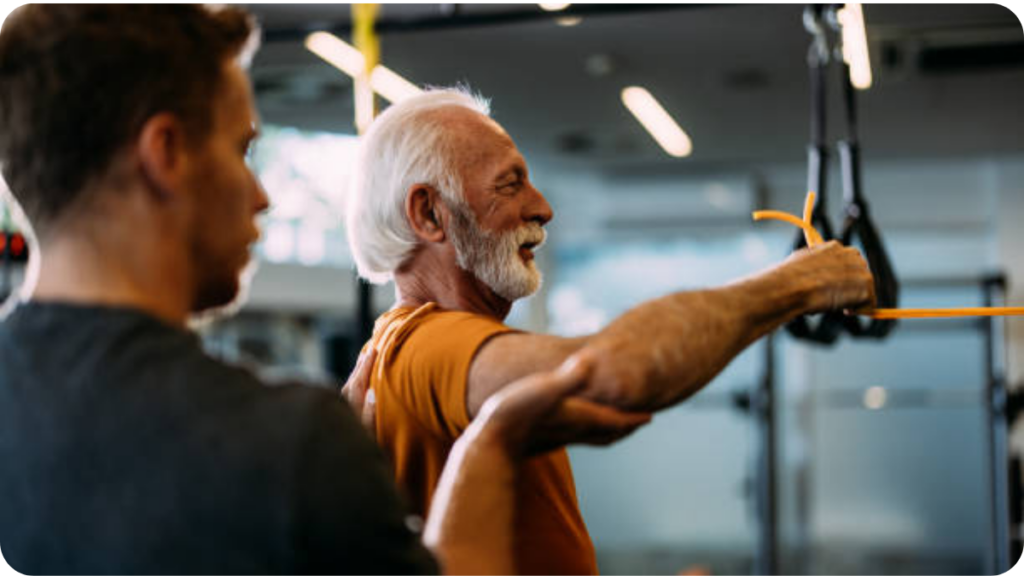
Strength Training with Guidance Can Better Support Meaningful Changes in Health
How Embody Approaches Men’s Health and Physical Performance
At Embody Health and Performance, we work with men who want to understand their bodies — not just manage their symptoms.
Our approach to men’s health combines physical therapy, adaptive, awareness-driven strength, and sports performance coaching to address the physical root causes that affect how men feel and function. That includes the cardiovascular, musculoskeletal, and neurological systems that underlie sexual health, energy, endurance, and performance at every age.
When Dr. Christopher Warden works with a male client, the assessment doesn’t start with the complaint — it starts with the whole person. Movement quality, strength patterns, cardiovascular capacity, body composition, nervous system tone, and lifestyle factors are all part of the picture.
For men who have been told to “just exercise more” without any real guidance on how or why — that’s where we can offer something different. We help men train with intention, build strength in ways that support the entire system, and understand what their body is telling them.
We also work alongside functional wellness coaching when appropriate, addressing the metabolic, hormonal, and lifestyle factors that contribute to men’s overall health and vitality.
What Men Can Do Right Now
You don’t have to wait for a diagnosis or a crisis to start taking your physical health seriously. And you don’t have to navigate it alone.
Here are principles worth prioritizing:
- Build and maintain lean muscle mass — not just for aesthetics, but for metabolic and hormonal health
- Prioritize cardiovascular fitness through consistent movement that elevates your heart rate
- Address body composition over time — excess visceral fat is a direct driver of hormonal imbalance and inflammation
- Improve sleep quality — poor sleep disrupts testosterone and cortisol, both of which directly affect sexual function
- Manage chronic stress — the autonomic nervous system plays a significant role in sexual function, and chronic stress dysregulates it
These aren’t quick fixes. They’re principles that, applied consistently, compound over time into genuinely better health.
Frequently Asked Questions
Can exercise actually reverse erectile dysfunction?
For men whose ED is rooted in cardiovascular, metabolic, or muscular health factors — which accounts for a significant portion of cases — consistent exercise, and strength training in particular, has been shown to meaningfully improve erectile function. Results vary based on the underlying cause, and a thorough assessment is always the appropriate starting point.
What kind of exercise is most effective for ED?
Both aerobic exercise and resistance training have demonstrated benefits. Strength training is particularly notable for its effects on testosterone, body composition, and insulin sensitivity. A combination of both, tailored to your current fitness level, is generally the most effective approach.
Is erectile dysfunction always a sign of a cardiovascular problem?
Not always — but frequently enough that it warrants attention. ED can also be influenced by stress, sleep, hormonal imbalance, neurological factors, and medications. That’s exactly why it’s worth having a thorough conversation with a qualified provider rather than assuming the cause.
How does physical therapy relate to men’s sexual health?
Physical therapy addresses the muscular, neurological, and cardiovascular systems that directly affect sexual function. Pelvic floor health, core stability, blood flow, and movement quality all play a role in overall male sexual health — and all fall within the scope of integrative physical therapy.
Can men of all ages benefit from this approach?
Yes. While ED becomes more common with age, the underlying principles — building strength, improving cardiovascular fitness, addressing body composition and inflammation — are relevant and beneficial at every age. The earlier men take their physical health seriously, the stronger the foundation they build for long-term function.
Ready to Take Your Health Seriously?
If you’re dealing with erectile dysfunction — or simply want to take a more intentional, root-cause approach to your health as a man — we’d love to talk.
At Embody Health and Performance in Minnetonka, we work with men who are ready to understand what’s actually happening in their body and take a principled approach to improving it.
Call us at 952.935.4037 Monday through Friday, 7:00 AM to 5:00 PM. Or visit our Contact page to request a phone call, ask a question, or schedule your first session.
This article is educational and is not a substitute for individualized medical care.
For men whose ED is rooted in cardiovascular, metabolic, or muscular health factors — which accounts for a significant portion of cases — consistent exercise, and strength training in particular, has been shown to meaningfully improve erectile function. Results vary based on the underlying cause, and a thorough assessment is always the appropriate starting point.
Both aerobic exercise and resistance training have demonstrated benefits. Strength training is particularly notable for its effects on testosterone, body composition, and insulin sensitivity. A combination of both, tailored to your current fitness level, is generally the most effective approach.
Not always — but frequently enough that it warrants attention. ED can also be influenced by stress, sleep, hormonal imbalance, neurological factors, and medications. That’s exactly why it’s worth having a thorough conversation with a qualified provider rather than assuming the cause.
Physical therapy addresses the muscular, neurological, and cardiovascular systems that directly affect sexual function. Pelvic floor health, core stability, blood flow, and movement quality all play a role in overall male sexual health — and all fall within the scope of integrative physical therapy.
Yes. While ED becomes more common with age, the underlying principles — building strength, improving cardiovascular fitness, addressing body composition and inflammation — are relevant and beneficial at every age. The earlier men take their physical health seriously, the stronger the foundation they build for long-term function.


