
By Andrea Cyr, L.Ac, MAOM, Acupuncturist and Chinese Medicine Herbalist at Embody Health and Performance
The light thins. The air turns crisp and dry. Almost overnight, your household goes from loose summer evenings to backpacks, bell schedules, early alarms, and the first sniffles making their way home from the classroom.
If your family feels a little more run down, rushed, or reactive this time of year, you’re not imagining it. In Chinese medicine, autumn isn’t just a change in routine. It is a change of season with its own physiology, and it shows up in the body in specific, predictable places.
The good news is that once you understand where the season tends to create strain, you can support your family before that strain turns into the first cold of the year. Fall acupuncture, including pediatric acupuncture for children, paired with a few simple habits at home, is one of the most practical ways to do that.
What does Chinese medicine say about fall?
In Chinese medicine, autumn is the season of the Lung and Large Intestine. These paired channels govern the body’s outer boundary: the skin, the breath, the mucous membranes of the nose and throat, and what classical texts call wèi qì, or defensive qi. Autumn’s dry, contracting quality puts extra demand on that boundary. As a result, it’s the season to protect the lungs, settle digestion, and support the nervous system through change.
Classically, autumn belongs to the Metal element. Metal is associated with contraction, dryness, and the emotional theme of letting go. That fits the season well. After all, children are being asked to release the freedom of summer and adapt to structure, while parents are managing everyone’s adjustment at once.
What is Applied Channel Theory?
Applied Channel Theory is a clinical system of Chinese medicine developed by the late Dr. Wang Ju-Yi, a Beijing physician who refined his method over decades of hospital practice. He documented it with his student Jason Robertson in the book Applied Channel Theory in Chinese Medicine.
The core idea is simple and practical. Rather than treating the channels as abstract energy lines, Dr. Wang taught that they are living structures with real, palpable terrain. A trained practitioner reads that terrain with their fingertips, noticing nodules, tightness, temperature changes, and differences in depth along each pathway.
Where a channel feels congested or depleted tells the practitioner something specific about the organ system it serves. Treating the channel then becomes a direct way of supporting that system’s function, rather than working from a disease label alone. Most importantly for this season, Dr. Wang emphasized reading the body’s terrain early, so imbalance can be addressed before it becomes illness.
Why does fall stress the Lung and Large Intestine?
The Lung channel manages the exchange between your body and the outside world. It’s the first line of defense against wind, cold, and the crowded, recirculated air of classrooms and offices. When that terrain is already taxed by dryness, poor sleep, or a rocky transition, the first school-year cold has an easier time taking hold.
Applied Channel Theory frames this a little differently than “a weak immune system.” Instead, it asks whether the terrain along this pathway is congested or depleted. That shift matters, because it changes what you look for.
Early signs worth noticing
Because the Large Intestine is the Lung’s paired partner, the early signs often show up in more than one place:
- Tightness across the upper chest, shoulders, or upper back
- Dry skin, dry lips, or a scratchy throat
- A change in bowel patterns, especially constipation
- Shallow breathing or a tendency to hold the breath when stressed
- Disrupted sleep or lower energy in the late afternoon
- Mood shifts tied to the “letting go” quality of the season, such as sadness or irritability around transitions
None of these is a diagnosis. Rather, they are invitations to rest, adjust, and support the body while the fix is still simple.
Why digestion matters more than you might think
In Chinese medicine, the Lung doesn’t work alone. It depends on the Spleen and Stomach, the digestive system, for the nourishment that keeps its defenses strong. That’s why a child who eats on the run, skips breakfast, or lives on cold snacks and sugar often seems to catch everything going around.
In other words, settled digestion isn’t a separate concern from immunity. Regular meals, warm food, and unhurried mealtimes are part of how the whole family weathers seasonal change.
Seasonal foods help too. Moistening, lightly cooked foods such as pears, apples, soups, and porridges are a classical way to offset autumn’s dryness, especially once the furnace starts running.
A channel-informed autumn routine for your family
Chinese medicine has a classical saying, recorded in the Huangdi Neijing: treating illness after it has taken hold is like digging a well once you’re already thirsty. Prevention is the medicine. Still, prevention only works if it fits real life, and the most effective family routines are rarely the most elaborate ones. A few consistent habits will carry a household further than a perfect plan.
If school started a few weeks ago, you haven’t missed your window. These habits work just as well in October, and they’re worth revisiting before every major transition, including winter break.
- Protect the Lung–Large Intestine terrain. Layer clothing to cover the neck and upper back, a classically wind-vulnerable area. In addition, run a humidifier in bedrooms once the furnace kicks on, and encourage regular, unhurried bathroom habits. Bowel regularity is one of the most overlooked pieces of family wellness.
- Treat digestion as immune support. Choose warm, simple breakfasts, and keep meal timing steady even on rushed mornings. Likewise, ease off excess sugar and cold drinks, which classical pediatrics links to a more easily overwhelmed digestive system in children.
- Prepare before the first illness, not after. Stock your home with gentle, family-appropriate supports now, so you aren’t scrambling at 9 PM with a feverish child. As the days shorten, ask your provider whether vitamin D makes sense for your family. Once kids are old enough to tolerate them, saline nasal rinses a few times a week can help too.
- Ease into structure gradually. Shift bedtimes earlier in small steps rather than all at once, and get morning daylight and outdoor time whenever you can. The nervous system adapts best to change that arrives gently.
- Choose two or three habits, not ten. A tired household on a Tuesday night in October needs a routine it can actually keep. A modest plan you maintain beats an ambitious one that collapses by week three.
- Watch the terrain, not just the symptoms. A tight upper back, a dip in energy, restless sleep, or a shift in mood are early signals. Treat them as invitations to slow down and support the body, rather than problems to fix only once they’re acute.
Most children, and most adults, thrive on the same foundations: whole foods, enough sleep, time outdoors, and connection. More targeted support is for the people who need it, such as the child who gets sick every few weeks or the parent running on empty.
Why this matters
Autumn asks a lot of children’s bodies and nervous systems. It also asks a lot of the adults running the household around them, and parents tend to put their own needs last. Supporting a child’s health is never just about the child. It’s about the whole family system, including the caregiver’s energy, sleep, and stress. When that terrain is depleted, everyone feels it.
Chinese medicine offers a different starting point than waiting for illness. It teaches you to read the season, notice early signals, and respond while the response is still gentle. That’s not a quick fix. Instead, it’s a principle: meet the season on the way in, not after it has already taken hold.
How Embody approaches fall acupuncture
At Embody Health and Performance, acupuncture is part of a whole-person, integrated model of care, not a standalone add-on. Our acupuncturist, Andrea Cyr, brings nearly two decades of clinical experience and continued training in Applied Channel Theory and Chinese herbal medicine to every session.
That means your visit starts with listening. Andrea will ask about your sleep, digestion, energy, stress, and what this season is asking of you and your family. Then she reads the terrain directly, palpating along the channels to find where the body is holding tension, dryness, or depletion. From there, treatment may include acupuncture, acupressure, herbal medicine, dietary guidance, breath work, or movement, depending on what your body needs right now.
Just as important, you leave with an understanding of what she found and what you can do at home. We teach; we don’t prescribe. The goal is for you to recognize your own early signals and respond with confidence, so you rely less on care over time, not more.
Fall acupuncture at Embody is available at our clinic inside The Marsh in Minnetonka. If you’re not sure whether acupuncture is the right starting point, call us at 952.935.4037, Monday through Friday from 7:00 AM to 5:00 PM, and we’ll help you figure out where to begin.
Pediatric acupuncture for the school year
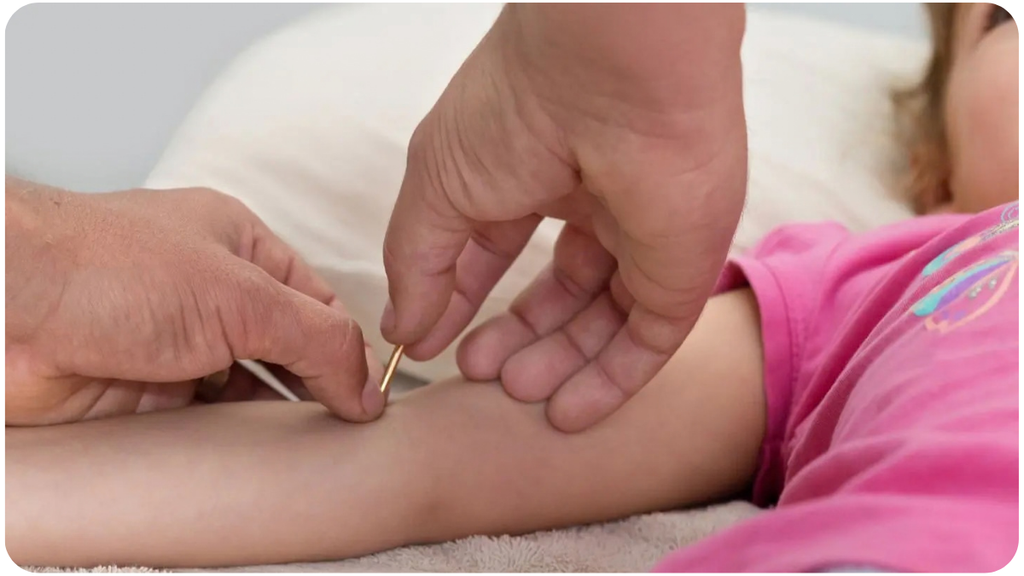
Children often feel seasonal transitions first. New classrooms, earlier mornings, and shared germs all land on systems that are still developing, which is why kids so often bring home the first cold of the year. Pediatric acupuncture offers a gentle way to support them through it.
At Embody, Andrea offers pediatric acupuncture adapted to each child’s age and comfort. Sessions are typically shorter and gentler than adult treatments, and they often include hands-on techniques such as acupressure alongside or instead of needles. Parents stay involved throughout, so you’ll understand what Andrea is finding and how to support your child at home.
Pediatric acupuncture can be a good fit for children who:
- Catch every cold or cough that comes through the classroom
- Struggle with sleep when routines change
- Have digestive changes, such as constipation or stomachaches, during busy or stressful stretches
- Feel anxious, irritable, or overwhelmed by transitions
Pediatric acupuncture doesn’t replace your child’s pediatrician, especially when they’re sick. Rather, it supports the systems that help them stay well between illnesses. If you’re not sure whether it’s the right fit, call us at 952.935.4037 and we’ll talk it through with you.
Related services at Embody
Seasonal transitions rarely affect just one system, which is why our team works together.
- Functional wellness coaching helps families build realistic routines around sleep, meals, and stress, so the habits in this article actually stick through a busy season.
- Integrative physical therapy addresses the neck, shoulder, and upper back tension that often builds during high-stress months. In addition, it helps you develop adaptive, awareness-driven strength that supports better breathing mechanics and posture.
- Acupuncture and physical therapy together can be especially effective when stress, tension, and pain overlap. Our clinicians coordinate care so each service supports the other.
When to reach out
Consider booking an acupuncture visit or a conversation with our team if:
- Your child catches every cold that comes through the classroom, or struggles with sleep, digestion, or mood when routines change
- Your family seems to pass the same illness back and forth all season
- You feel run down, tense, or depleted as the season changes
- Sleep, digestion, or mood reliably shift every fall
- You carry tension in your neck, shoulders, or upper back that won’t let go
- You want to prepare for winter instead of reacting to it
You don’t need to have everything figured out before you call. That’s what the first conversation is for. You can reach us at 952.935.4037 during business hours, or use our Contact page to request a call, ask a question, or request a session.
When to seek urgent care
Some symptoms need prompt medical attention rather than seasonal support. Contact your child’s pediatrician, visit urgent care, or call 911 for:
- Difficulty breathing, wheezing, or bluish lips
- A high fever that won’t come down, or any fever in an infant
- A stiff neck with fever, severe headache, or unusual drowsiness
- Signs of dehydration, such as very little urination or no tears when crying
- Symptoms that are worsening rapidly or don’t improve after several days
Frequently asked questions
In Chinese medicine, each season is paired with an organ system. Fall belongs to the Lung and its partner, the Large Intestine, which govern breathing, the skin, the nose and throat, and the body’s defensive qi. Fall’s dryness and the emotional work of letting go both place extra demand on this system, which is why it deserves extra support this time of year.
Acupuncture is used in Chinese medicine to support the body’s defensive qi, its first line of protection against seasonal illness. At Embody, fall acupuncture focuses on the Lung and digestive systems, sleep, and stress regulation, all of which shape how well your body handles cold-and-flu season. It works best alongside the daily habits that support immunity, not in place of them.
For many families, yes. Pediatric acupuncture is gentle and adapted to a child’s age and comfort, and it can support the systems that tend to struggle during the school year: breathing, digestion, and sleep. It’s not a replacement for your pediatrician when a child is ill, but it can be a helpful part of keeping them well between illnesses.
Yes, when it’s provided by a licensed acupuncturist trained in pediatric care. Treatment for children is gentle and adapted to their age, often using fewer needles, shorter sessions, or non-needle techniques like acupressure. At Embody, parents are part of every pediatric session.
Applied Channel Theory is a clinical system of Chinese medicine developed by Dr. Wang Ju-Yi. Practitioners palpate the channels directly, feeling for tightness, nodules, and temperature changes, to understand how the related organ systems are functioning and where to focus treatment.
Why do kids get sick more often when school starts?
Children encounter many new microbes in crowded classrooms at the same time their sleep, routines, and stress levels are shifting. From a Chinese medicine perspective, autumn dryness and transition stress can tax the Lung system, which serves as the body’s first line of defense.
Focus on a few consistent habits: earlier, steadier bedtimes, warm and regular meals, layered clothing that protects the neck, humidified bedrooms, and plenty of morning daylight and outdoor time. Small routines you can maintain matter more than an elaborate plan.
Most people feel very little. Acupuncture needles are hair-thin, and many clients find sessions deeply relaxing. Your acupuncturist will adjust the approach to your comfort level, and for children, that often means fewer needles or none at all.
Embody Health and Performance offers acupuncture and pediatric acupuncture inside The Marsh in Minnetonka, serving families from Wayzata, Eden Prairie, Excelsior, and Plymouth. Call 952.935.4037 or visit our Contact page to request a session.
Meet the season on the way in
Autumn will ask something of your family’s bodies and nervous systems this year. Fortunately, you don’t have to wait for the first fever or the first week of exhaustion to respond. A few steady habits and a practitioner who knows how to read the terrain can make the whole season feel different.
If you’re ready to support yourself or your family this fall, call Embody Health and Performance at 952.935.4037, Monday through Friday from 7:00 AM to 5:00 PM. Prefer to reach out online? Visit our Contact page to request a call, ask a question, or request a session. We’ll help you decide whether acupuncture, pediatric acupuncture, functional wellness coaching, or another service is the best place to start.
This article is educational and reflects general principles from Chinese medicine and integrative care. It is not a substitute for individualized medical care, especially for children with existing health conditions.


