Written by Melissa Vanderlinde, PT, DPT
For many runners, it starts the same way.
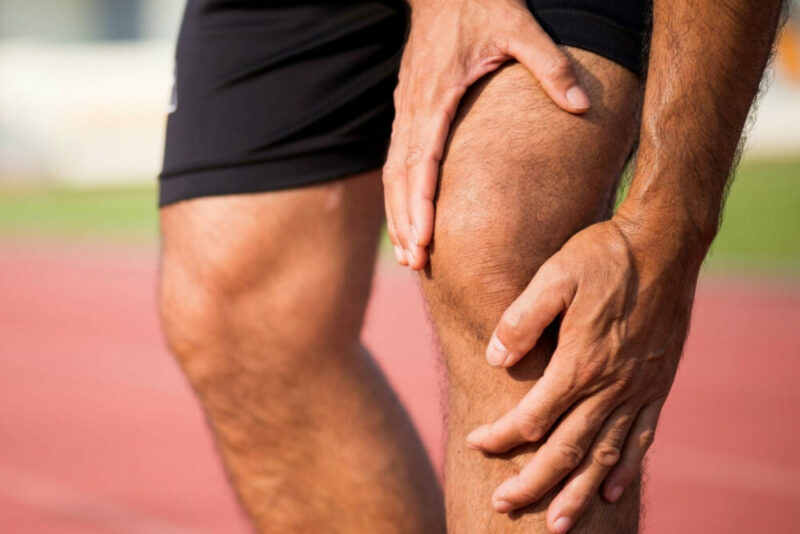
A few miles into a run, a sharp pain shows up along the outside of the knee. At first you push through it. Then you slow your pace, and eventually you have to stop and walk home. After a few days of rest, the pain fades, until it comes back on your next run, often at nearly the same mile.
If this sounds familiar, you’re not alone. Iliotibial band syndrome (ITBS) is one of the most common causes of outer knee pain in runners. It affects everyone from first-time 5K runners to experienced marathoners chasing a personal best.
At Embody Health and Performance, we see pain as information rather than something to simply “fix.” Your body is telling you that something in your movement, training, recovery, or overall health needs attention. So instead of chasing symptoms, our approach to Running Physical Therapy is to understand the whole picture. That way, you can return to running with confidence and resilience.
What Causes IT Band Pain When Running?
IT band pain when running is usually caused by repeated compression at the outside of the knee, which builds up when training load rises faster than your body can adapt. It is not simply a “tight” IT band. Hip control, running mechanics, sudden jumps in mileage or hills, and how well you recover between runs all play a role.
Because several factors usually combine, lasting relief comes from addressing the reasons behind the pain, not just the spot that hurts.
What Is IT Band Syndrome?
The iliotibial (IT) band is a thick band of connective tissue that runs along the outside of the thigh, from the hip to just below the knee. Its main job isn’t to create movement. Instead, it helps stabilize the hip and knee while you walk, hike, and run.
For years, IT band syndrome was described as a “friction” injury, with the band rubbing back and forth over the bone at the outside of the knee. However, anatomical research has challenged that idea. Current understanding suggests the band compresses a richly innervated layer of tissue at the outer knee, especially when the knee is bent about 30 degrees. That happens to be the knee angle when your foot lands during running.
This is why many runners describe their IT band as “tight,” even though tightness is rarely the real problem. The more useful question is how repeated loading is affecting the structures at the outside of the knee, and why your body isn’t adapting to that load right now.
Where Is IT Band Syndrome Pain Located?
Iliotibial band syndrome pain is usually located on the outside of the knee, slightly above the joint line, over a bony bump called the lateral femoral epicondyle. Most runners can point to it with one finger.
Common Signs of IT Band Syndrome
- Sharp or burning pain on the outside of the knee during a run
- Pain that starts after a predictable distance or amount of time
- Increased pain when running downhill
- Discomfort going down stairs after a run
- Pain that eases quickly once you stop, then returns on your next run
- Tenderness when pressing on the outside of the knee, just above the joint
The IT Band Referral Pattern: What’s Typical and What Isn’t
IT band pain tends to stay in one spot at the outside of the knee. Some runners also feel it spread a short distance up the outer thigh or down toward the outer shin, just below the knee.
Other symptoms, though, point toward a different source. Pain that clearly travels down the leg, numbness or tingling, swelling inside the knee joint, or a catching or locking sensation may be coming from the lower back, the knee joint itself, or another tendon nearby. This is one reason a thorough evaluation matters. Several conditions can feel like “IT band pain,” and each one calls for a different plan.
Runner’s Knee vs. IT Band Syndrome: What’s the Difference?
The terms get mixed up often, partly because “runner’s knee” has been used for both conditions. In most clinical settings, though, runner’s knee refers to patellofemoral pain syndrome. That is a different problem with a different pattern.
- Location: Runner’s knee is felt around or behind the kneecap. IT band syndrome is felt on the outside of the knee.
- Triggers: Runner’s knee often flares with squatting, stairs, kneeling, or sitting for long periods with the knee bent. IT band pain usually builds during a run and is often worse downhill.
- Timing: IT band pain often appears at a predictable point in a run. Runner’s knee tends to be more of a constant ache during and after loading activities.
Both conditions respond well to physical therapy, and both are strongly influenced by training load and how the hip and foot control the knee. Still, knowing which one you’re dealing with shapes the plan.
How Is IT Band Syndrome Diagnosed?
IT band syndrome is diagnosed mainly through a detailed history and a hands-on physical examination. Imaging is rarely needed unless symptoms don’t fit the typical pattern. A physical therapist will ask when your pain starts, what makes it worse, and how your training has changed. They will also use a few IT band special tests to see whether your symptoms can be reproduced.
The Renne Test
During the Renne test, you stand on the affected leg and bend the knee to roughly 30 to 40 degrees, similar to a shallow single-leg squat. If this reproduces the familiar pain at the outside of the knee, the test is considered positive. Because it loads the knee the way running does, it is one of the most practical ITB syndrome special tests.
The Noble Compression Test
For the Noble test, you lie on your back with the knee bent. The clinician presses on the outside of the knee, just above the joint, while slowly straightening your leg. Pain that appears around 30 degrees of knee bend supports an IT band syndrome diagnosis.
The Ober Test
The Ober test is done lying on your side. It assesses how freely the top leg drops toward the table, which reflects tension through the outer hip and thigh. It can offer useful information about hip mobility, but on its own it does not confirm IT band syndrome. Plenty of people with “tight” results never develop knee pain.
Why a Running Assessment Matters More Than Any Single Test
Special tests help confirm where pain is coming from, but they don’t explain why it developed. That’s where a movement and running gait assessment comes in. Watching how you run, balance on one leg, and absorb force shows what is driving the irritation. That insight is what turns a diagnosis into a plan.
If you’ve been guessing about your outer knee pain, a single evaluation can bring a lot of clarity. Call our team at 952.935.4037 during business hours, or request a call through our Contact page.
Why Does IT Band Pain Happen? Looking Beyond the Knee
While the discomfort is felt at the knee, the reasons it develops usually involve how your whole body moves and adapts to training. Every runner has a unique movement strategy and training history, so the contributing factors look a little different for each person.
Training Load
One of the biggest contributors to IT band syndrome isn’t weakness. It’s how much stress your body is managing compared with how well it is recovering. Tissues adapt when training progresses gradually. Problems tend to show up when workload increases faster than your body can keep up, such as:
- Rapid increases in weekly mileage
- Adding speed work or intervals too quickly
- More hill or downhill running than usual
- Returning to running after time away
- Balancing high training loads with demanding work, family life, or short sleep
Running Mechanics
There’s no single “perfect” running form. Even so, certain patterns increase load on the outside of the knee. These include a narrow or crossover step, where the feet land close to or across the midline, overstriding, and a low step rate (cadence). Small, targeted changes to these patterns can meaningfully reduce irritation, often without a complete overhaul of how you run.
Hip and Trunk Control
Each running stride is a single-leg balance task. When the hip and trunk have trouble controlling the pelvis and thigh, the knee can collapse inward slightly with every step. Over thousands of strides, that small difference adds up and puts extra demand on the structures at the outer knee.
Recovery, Sleep, Nutrition, and Stress
Recovery isn’t just what happens after a run. It’s how your body adapts between runs. Poor sleep, under-fueling, dehydration, and high life stress all lower your capacity to absorb training. Because of this, a training plan that felt easy during a calm season can become too much during a busy one.
Can You Stretch or Foam Roll the IT Band Away?
Many runners try stretching and foam rolling first, which makes sense. These tools can feel good and temporarily ease discomfort. However, the IT band is a dense, strong band of connective tissue, and stretching or rolling doesn’t meaningfully lengthen it.
If stretching, foam rolling, and rest have given you short-term relief without lasting change, that tells you something useful. The underlying load and movement factors probably haven’t been addressed yet. Mobility work can still be part of a good plan, but it works best alongside strength, load management, and changes to your running.
Do You Need to Stop Running With IT Band Pain?
Not always. A common misconception about running injuries is that complete rest is the only solution.
For many runners, modifying training while continuing to move is both safe and helpful. Depending on your symptoms, that may mean adjusting mileage, pace, terrain, or workout intensity while your body recovers. Often it means running on flat ground for a while and staying below the point where pain begins.
Total rest may calm symptoms, but it doesn’t build the capacity your body needs. That’s why pain so often returns when training resumes. The goal is to keep as much fitness as possible while creating the right conditions for healing.
Why This Matters for Your Long-Term Running
Treating IT band pain as just a knee problem often leads to a frustrating cycle: rest, return, flare-up, repeat. Each round can chip away at your confidence, disrupt your training, and take the joy out of running.
When you understand why the pain developed, you can change those factors directly. As a result, you recover from this episode and also become more resilient to the next training block, race season, or mileage jump.
How Embody Approaches IT Band Pain
Our approach to running injuries is root-cause focused and whole-person centered. We aren’t interested in just quieting the painful spot. We want to understand how you move, how you train, and how you live, so we can build a plan that fits your body and your goals.
A Thorough Running Evaluation
Your first visit includes time to talk through your history and goals, followed by a comprehensive movement and running assessment. Depending on your needs, we may look at:
- Running gait, including cadence, stride length, and step width
- Single-leg balance and pelvic control
- Hip, trunk, and foot mechanics
- Strength and mobility
- Training volume, intensity, and recent changes
- Sleep, nutrition, stress, and recovery habits
- Other activities you enjoy and the physical demands of your day
- Previous injuries and your running goals
Looking at Your Whole Day, Not Just Your Runs
Running is only one part of what your body handles each week. Other activities can add to the load on your hips and knees, such as cycling, hiking, strength classes, or weekend sports. Your daily routine matters too. Long hours at a desk, a job that keeps you on your feet, a long commute, or chasing kids around all shape how your body feels and recovers.
That’s why we ask about the full picture of your life, not just your training log. When we understand everything your body is managing, we can find what’s helping your recovery, what may be slowing it down, and how to make your plan fit the life you actually live.
Adaptive, Awareness-Driven Strength
Strength training isn’t only about preventing injury. It’s what allows your body to tolerate the repetitive demands of running. Rather than handing every runner the same exercise sheet, we build individualized programs rooted in adaptive, awareness-driven strength. That means progressing load in a way that respects how your body is responding right now. Your program may include single-leg strength work, hip and core stability, foot and ankle strengthening, balance and coordination training, and plyometrics when you’re ready.
Hands-On Care and Return-to-Run Programming
When it’s appropriate, hands-on treatment can help calm symptoms and improve how you move. From there, we guide you through a structured return-to-running progression, adjusting mileage, terrain, and intensity in steps that match your progress.
Education You Can Use for Years
We teach; we don’t prescribe. Our goal is for you to leave understanding why your pain developed, which early warning signs to watch for, and how to adjust your training on your own. Because every session at Embody is one-on-one, we have time to answer your questions and personalize your plan around your goals.
If you’re not sure whether physical therapy is the right starting point, that’s okay. Call us during business hours and we’ll help you figure out the best next step.
Related Services That Support Runners
Physical therapy is usually the starting point for IT band pain. Still, some runners benefit from additional support as they recover and build back up.
- Sports performance coaching helps runners who want to keep building strength, power, and durability once they’re back to full training, so they can perform better and stay healthy through race season.
- Functional wellness coaching supports the recovery side of training, including sleep, nutrition, hydration, and stress. These factors strongly influence how well your body adapts to running.
We’ll only recommend these services if they are a natural fit for your goals.
When to Reach Out to a Running Physical Therapist
Consider scheduling a Running Physical Therapy evaluation if you:
- Have recurring pain on the outside of your knee during or after runs
- Have cut back or stopped running because of IT band pain
- Notice discomfort every time your mileage increases
- Have tried stretching, foam rolling, and rest without lasting improvement
- Are training for a race and want to stay healthy through your build
- Want to prevent the same injury from coming back
Getting assessed early often keeps a minor issue from turning into a long setback.
When to Seek Prompt Medical Care
Most IT band pain is an overuse issue that responds well to conservative care. However, some symptoms call for prompt medical evaluation. Seek care soon if you notice:
- Significant swelling inside the knee
- Locking, catching, or the knee giving way
- Pain that began with a specific fall, twist, or impact
- Numbness, tingling, or weakness in the leg or foot
- Redness, warmth, or fever along with knee pain
- Pain at rest or at night that is getting worse
If you’re unsure, it’s always reasonable to get checked.
Frequently Asked Questions About IT Band Pain While Running
IT band syndrome pain is usually felt on the outside of the knee, slightly above the joint line, over the bony bump of the outer thigh bone. It may spread a short distance up the outer thigh or down toward the outer shin.
The Renne test is a clinical test for IT band syndrome. You stand on the affected leg and bend the knee about 30 to 40 degrees. If this reproduces your outer knee pain, the test is considered positive.
IT band syndrome is diagnosed mainly through your history and a physical exam, including special tests such as the Renne and Noble tests. Imaging is rarely needed unless your symptoms don’t match the typical pattern.
Often, yes, with modifications. Adjusting mileage, pace, and terrain, and staying below the point where pain begins, frequently allows you to keep running while you recover.
Runner’s knee usually refers to pain around or behind the kneecap. IT band syndrome causes pain on the outside of the knee that often builds at a predictable point during a run.
Recovery time varies with how long symptoms have been present, your training goals, and how quickly the contributing factors are addressed. Many runners see meaningful improvement within several weeks when load, strength, and mechanics are addressed together.
Ready to Get Back to Running?
If IT band pain has been limiting your training, you don’t have to figure it out alone. At Embody Health and Performance, located inside The Marsh in Minnetonka, our physical therapists work one-on-one with runners to uncover the root cause of their symptoms, build an individualized plan, and guide a confident return to running.
Call us at 952.935.4037, Monday through Friday, 7:00 AM to 5:00 PM. You can also visit our Contact page to request a call, ask a question, or request a session.
The goal isn’t just getting you out of pain. It’s helping you build a stronger, more resilient relationship with running for the miles ahead.
This article is educational and is not a substitute for individualized medical care.


